
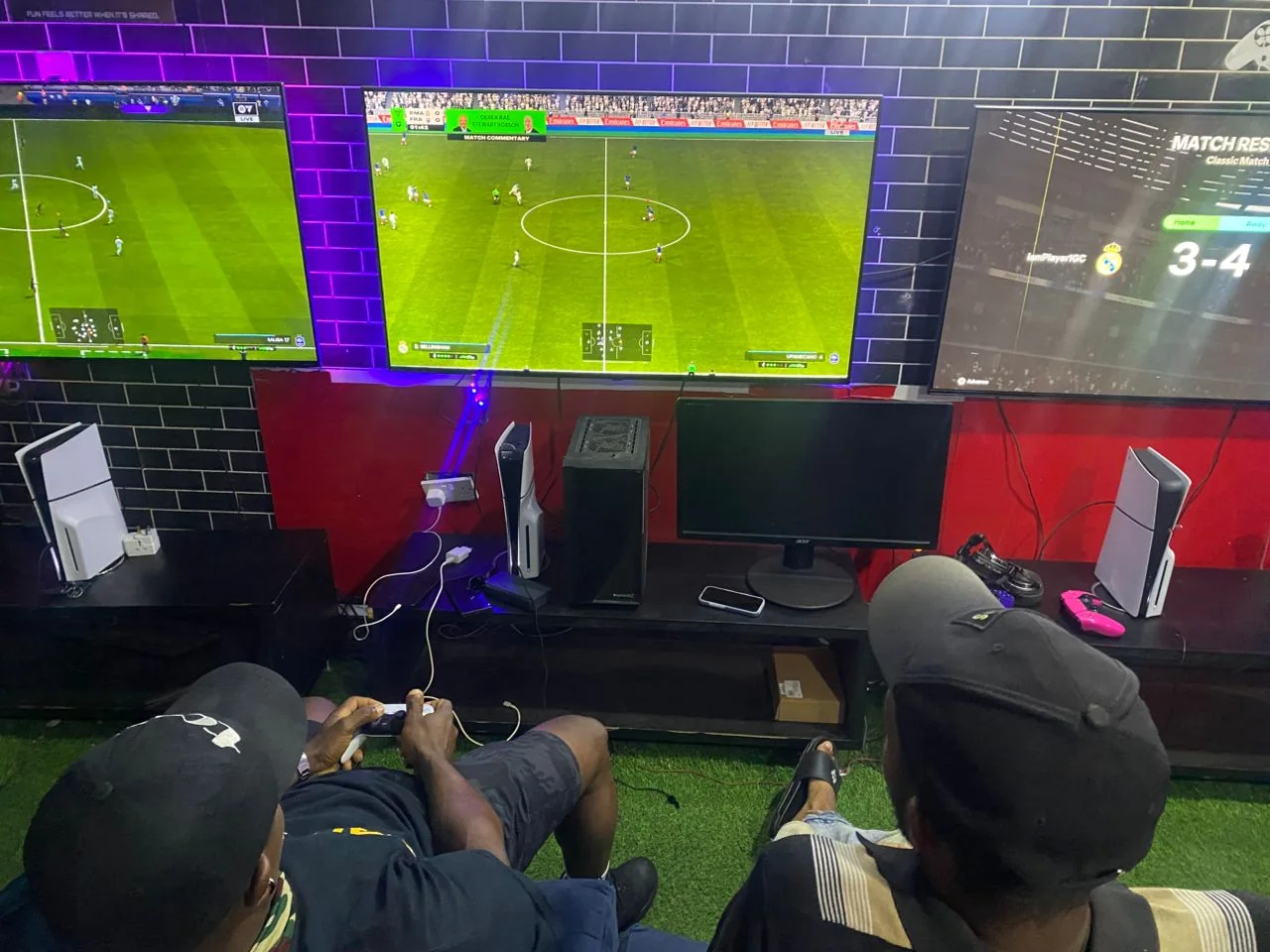
Running a public game cafe teaches equipment lessons very quickly. Equipment that works well at home may not survive the pressure of daily public use. At Player One Game Cafe, we have learned that buying gaming equipment is only one part of the business. The bigger challenge is keeping it working, protecting it from damage, training staff, and choosing the right equipment for the right customer experience.
This article shares practical lessons from operating a game cafe environment in Lagos.
1. Public-use equipment must be stronger than home-use equipment
A console, controller, headset or steering wheel used at home may be handled by one person or a family. In a game cafe, many different customers use the same equipment. Some are careful. Some are excited. Some are kids. Some are first-time users. Some do not understand the value of the equipment.
That means public-use equipment needs:
- Strong build quality
- Easy maintenance
- Replaceable parts
- Clear handling rules
- Staff supervision
- Damage reporting
- Cleaning routine
- Proper storage
Cheap equipment may look attractive at purchase, but it can become expensive if it breaks often.
2. Controllers need strict control
Controllers are one of the most heavily used items in any game cafe. They can fall, get hit, develop drift, lose buttons, or disappear if not properly controlled.
A good game cafe should have:
- Controller check-in/check-out process
- Daily condition checks
- Charging routine
- Staff accountability
- Customer handling rules
- Spare controllers
- Repair/replacement plan
The controller may look small, but it directly affects customer experience.
3. Screens must be protected
Screens are expensive and fragile. In a busy gaming space, screens can be damaged by movement, VR accidents, rough play, poor mounting, or bad layout.
This is why layout matters. Avoid placing screens too close to VR play areas or customer movement paths. Staff must also monitor customers properly, especially during VR sessions.
A good screen setup should consider:
- Safe distance from players
- Strong mounting or stable stand
- Cable protection
- Surge protection
- Visibility
- Replacement cost
- Branch responsibility policy
4. VR headsets require hygiene and safety systems
VR headsets are powerful, but they need discipline. Customers wear them on their faces, sweat in them, move with them, and sometimes forget the physical room.
A VR business must manage:
- Face hygiene
- Lens care
- Strap care
- Controller charging
- Boundary setup
- Customer briefing
- Staff monitoring
- Safe play area
- Storage and charging
- Battery management
VR should never be treated like a normal controller. It needs a proper operating system.
5. Racing simulators need strong mounting and customer education
Racing simulators are physical. Customers steer aggressively, press pedals hard, pull the wheel, and sometimes treat the setup like a real car. If the wheel, cockpit or pedal system is not properly mounted, the experience becomes unstable and equipment can be damaged.
Important lessons:
- Use stable cockpits
- Mount wheels properly
- Protect cables
- Explain handling rules
- Check pedals and wheel daily
- Monitor aggressive play
- Keep spare parts where possible
Racing is a premium attraction, so it must feel solid.
6. Power and internet are part of the equipment plan
Many people plan consoles and forget power and internet. But if power fails or internet is unstable, the customer experience suffers.
A game cafe should consider:
- Surge protection
- Backup power
- Router quality
- Cable management
- Internet reliability
- Update schedules
- Offline game options
- Payment device connectivity
The best gaming equipment cannot perform well inside a weak infrastructure setup.
7. Staff behavior protects or destroys equipment
Equipment is not only damaged by customers. Sometimes it is damaged because staff are distracted, careless, or poorly trained.
Staff must know:
- How to brief customers
- How to handle equipment
- How to report faults
- How to stop unsafe play
- How to clean devices
- How to arrange equipment after use
- How to monitor customers during VR
- How to prevent misuse
A strong equipment policy is useless without staff discipline.
8. Buy based on business model, not excitement
It is easy to buy equipment because it looks exciting. But every purchase should answer a business question:
- Will customers pay for this
- Is it durable
- Can staff operate it
- Can it fit the space
- Can it generate content
- Can it support events
- Can it be repaired or replaced
- Does it improve the brand
Equipment should support the business model, not just the owner’s excitement.
Final thought
The best equipment lesson from running Player One is simple: equipment is not just a purchase; it is a system. The right equipment, wrong layout, poor staff training, and weak maintenance can still fail. But the right equipment with the right operations can become a powerful revenue driver.
For anyone building a game cafe, VR arena or gaming lounge, start with the business model first, then buy equipment that fits the plan.