
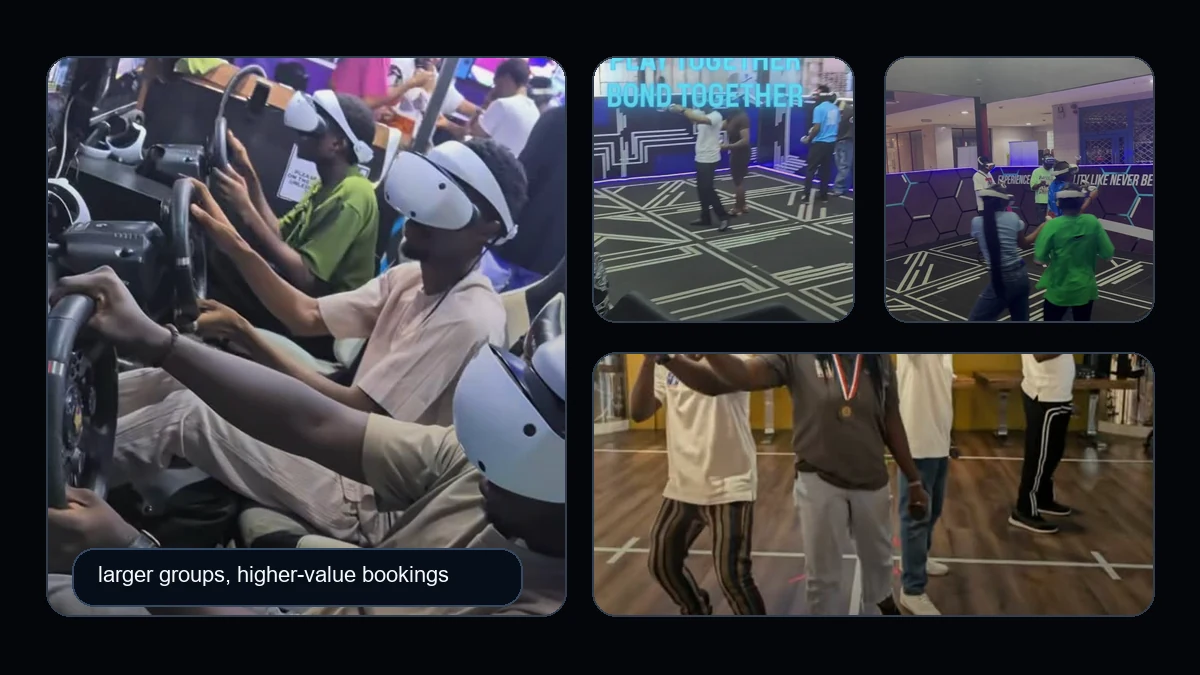
Brands are always looking for ways to get attention, create engagement and build emotional connection. In Nigeria, one of the most powerful opportunities is gaming. Gaming is no longer just something people do privately at home. It is becoming social, physical, competitive, content-driven and event-friendly.
At Player One Game Cafe, we see how people react when they step into a gaming environment. They compete, laugh, record videos, challenge friends, bring groups, celebrate birthdays, create content and remember the experience. That is exactly what brands want: attention, participation and memory.
1. Gaming creates participation, not just viewing
Traditional advertising often asks people to watch or listen. Gaming asks people to participate.
A customer can race, play VR, compete on PS5, join a challenge, appear on a leaderboard, win a prize, take photos, record a video or tag friends. This makes the brand experience more active.
For a brand, that is powerful because customers are not just seeing the brand; they are experiencing something around it.
2. Gaming is naturally social
Gaming brings people together. Friends want to challenge each other. Couples want to try something different. Families want shared fun. Students want group experiences. Corporate teams want bonding activities. Creators want content.
A brand activation inside a gaming environment can reach people when they are relaxed, excited and socially engaged.
This is different from forcing brand messages into people’s faces. The brand becomes part of a fun moment.
3. Gaming creates content
Modern brand visibility is not only about people attending an event. It is also about what they share afterwards.
Gaming moments are content-friendly:
- Someone screaming in VR
- A friend losing a racing challenge
- A birthday group playing PS5
- A company team competing
- A creator testing a simulator
- A student trying VR for the first time
- A brand-sponsored leaderboard
These moments can become Instagram reels, TikTok clips, YouTube shorts, event recaps and customer-generated content.
4. VR and racing make activations feel premium
Not every activation needs to be a normal booth with banners and flyers. VR and racing simulators create a stronger emotional reaction because customers feel the experience physically.
A VR activation can create surprise. A racing activation can create competition. A gaming lounge activation can create community. Combined properly, these experiences can make a brand look innovative and culturally relevant.
5. Brands can reach different audiences through gaming
Gaming is not only for one type of person. At Player One, gaming experiences attract:
- Kids and teens
- Students
- Young adults
- Families
- Corporate teams
- Creators
- Event planners
- Schools
- Tech enthusiasts
- Casual players
- Competitive gamers
This makes gaming useful for many brand categories, including beverages, tech products, telecoms, fintech, schools, entertainment brands, lifestyle brands, sportswear, food brands and youth-focused campaigns.
6. Gaming activations can be measured better
A good gaming activation can track more than attendance. It can track:
- Number of participants
- Number of game sessions
- Leaderboard entries
- WhatsApp inquiries
- QR code scans
- Content created
- Social tags
- Product demos
- Customer feedback
- Event photos/videos
- Leads generated
This makes it easier for brands to understand what happened.
7. Gaming works for schools and youth programs
Brands that care about youth engagement can use gaming to support school trips, youth experiences, digital exposure and recreational learning. VR can introduce students to new technology. Esports can teach competition and teamwork. Racing and multiplayer games can create structured group challenges.
This gives brands a way to support something fun and meaningful.
8. Gaming can make malls and venues more attractive
Malls and venues need experiences that make people stay longer and come back. Gaming can help create that. A strong VR or gaming activation can attract attention, increase dwell time and create content around the venue.
For brands working with malls, cinemas, hotels or event venues, gaming can become the attraction that pulls people in.
9. The brand must fit the experience
A good gaming activation should not feel forced. The brand should be integrated naturally.
Examples:
- Beverage brand sponsors a racing challenge
- Tech brand sponsors VR demo day
- Fintech brand sponsors tournament prizes
- School brand sponsors youth VR session
- Apparel/shoe brand supports creator gaming challenge
- Equipment brand places products for testing
- Telecom brand sponsors online gaming night
The best activations connect the brand to the energy of the experience.
Final thought
Gaming activations work because they turn brand visibility into participation, competition, content and memory. In a market where attention is difficult to win, gaming gives brands a way to be experienced, not just seen.
Player One Game Cafe is building a platform where brands can connect with gamers, families, students, creators, schools, corporate teams and communities through real experiences.